
The most destructive fire growth happens at night
Quencher is the first aircraft that can stop it
Preventing overnight expansion reduces fire size, lowers suppression cost, and protects communities before morning even comes.
Extending Fixed-Wing Aerial Firefighting Beyond Sunset
Conventional crewed amphibious firefighting aircraft remain predominantly daylight-operated, leaving a significant suppression gap after sunset.
Visibility requirements, scooping risks, pilot workload and operational restrictions mean conventional crewed amphibious firefighting aircraft are generally withdrawn from suppression operations after sunset.
This leaves active wildfires uncontested for 10–12 hours—precisely when the fire is naturally weakening and most vulnerable to suppression.
During this window, even moderate winds can trigger uncontrolled nighttime fire runs, expanding the perimeter and increasing the intensity firefighters must face the next morning.
Quencher changes this reality completely.
Uninterrupted fire suppression
Firefighting Capability
Quencher reduces overnight fire growth by 85%.
| Scenario | Sunset (18:00) | Sunrise (06:00) | Change |
|---|---|---|---|
| No Night Ops | 2.2 Km² | 3.4 Km² | 1.2 Km² |
| With Quencher | 2.2 Km² | 2.4 Km² | 0.18 Km² |
Assumes moderate nighttime winds (18–22 km/h), rising humidity, mixed-shrub fuel type, and inaccessible terrain for night ground crews. Values reflect typical overnight fire-spread behaviour using a simplified perimeter-growth model. Quencher performance based on Marcos Aerospace internal 2025 specifications. Figures are illustrative for comparative analysis only.
Why Night-Time Firefighting Matters
Wildfire behaviour shifts dramatically after sunset:
-
Fire intensity decreases
-
Humidity rises, slowing spread
-
Wind typically reduces, lowering spotting
-
Convection columns collapse, improving drop effectiveness
These conditions create a valuable suppression window, yet conventional fixed-wing aerial firefighting has remained largely unable to take advantage of it.
As a result, fires are allowed to grow overnight, often substantially.
Quencher turns this into a strategic advantage.
What Happens When a Fire Is Left Untackled Overnight
When fixed-wing firefighting aircraft stop at sunset, the fire does not.
Even in cooler nighttime conditions:
-
The perimeter continues to expand unchecked
-
Wind shifts—common between 02:00–06:00—can trigger rapid fire runs
-
Fires can jump containment lines
-
The morning begins with a larger, hotter, more dangerous fire
This overnight growth is one of the main drivers of escalation from small fires to regional emergencies.
How Quencher Changes the Overnight Dynamics
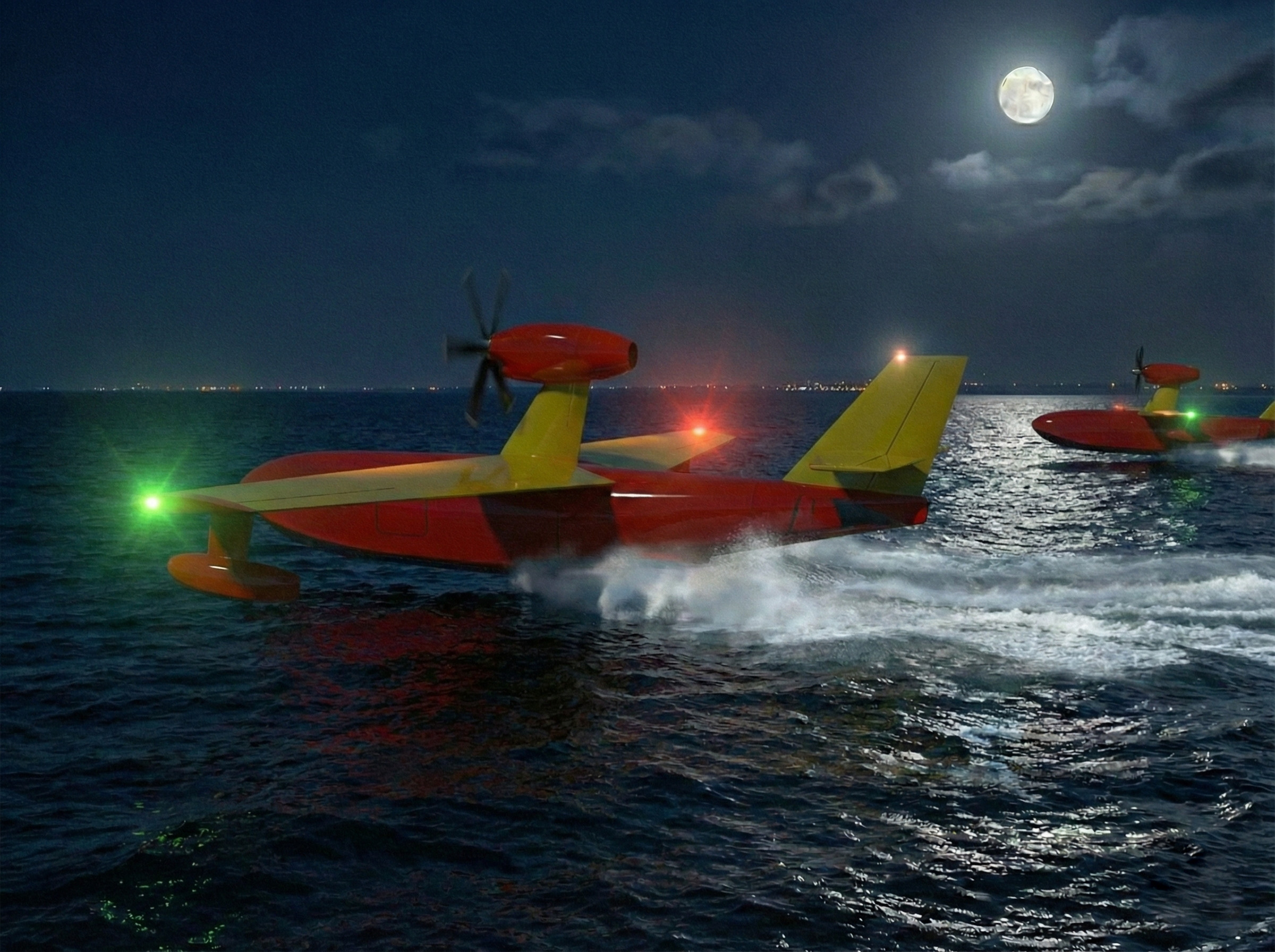
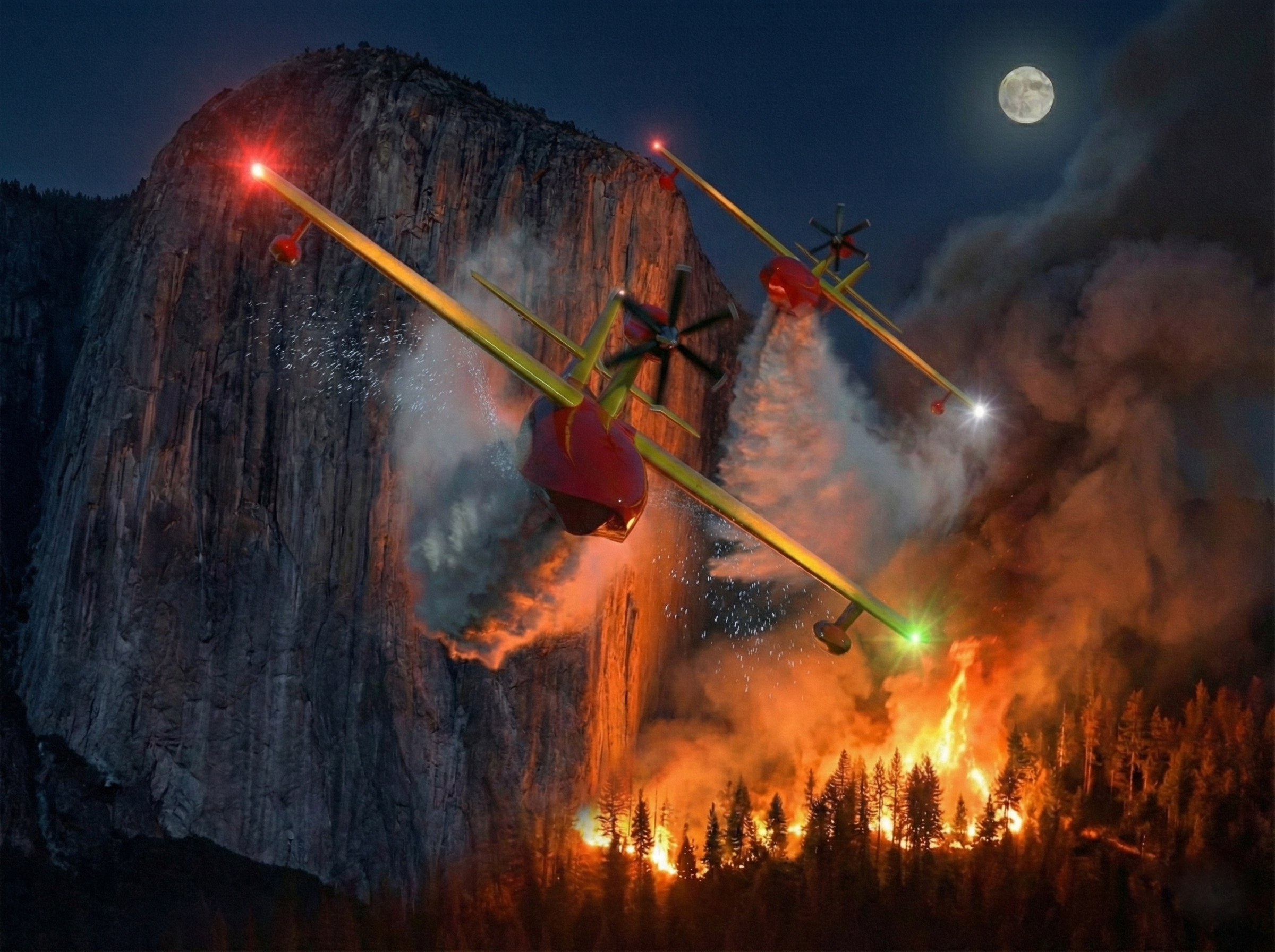
Quencher is the world’s first amphibious water-bomber capable of continuous, autonomous 24-hour operation.
It applies precise, repeatable water drops long after all crewed aircraft are grounded.
While wildfire behaviour naturally weakens at night, Quencher maintains constant suppressive pressure:
-
Controls fire spread when it is most vulnerable
-
Prevents nighttime enlargement of the fire perimeter
-
Counters wind-driven flare-ups during overnight shifts
-
Keeps the fire cool and stabilised through the entire night
By morning, ground crews face a smaller, cooler, slower fire, improving safety and dramatically increasing the probability of containment.
This is the first time in wildfire aviation history that a platform can deliver effective, targeted suppression through the entire 24-hour cycle.
Operational Benefits of 24-Hour Suppression
-
Maintains continuous pressure on the fire
-
Prevents nighttime fire expansion
-
Reduces next-day fire intensity
-
Enables faster and safer containment
-
Protects firefighters working on the ground
-
Removes visibility and crew-duty limitations
-
Stabilises fire behaviour before sunrise
-
Reduces overall suppression cost and time
Night Operations: A New Standard in Wildfire Aviation
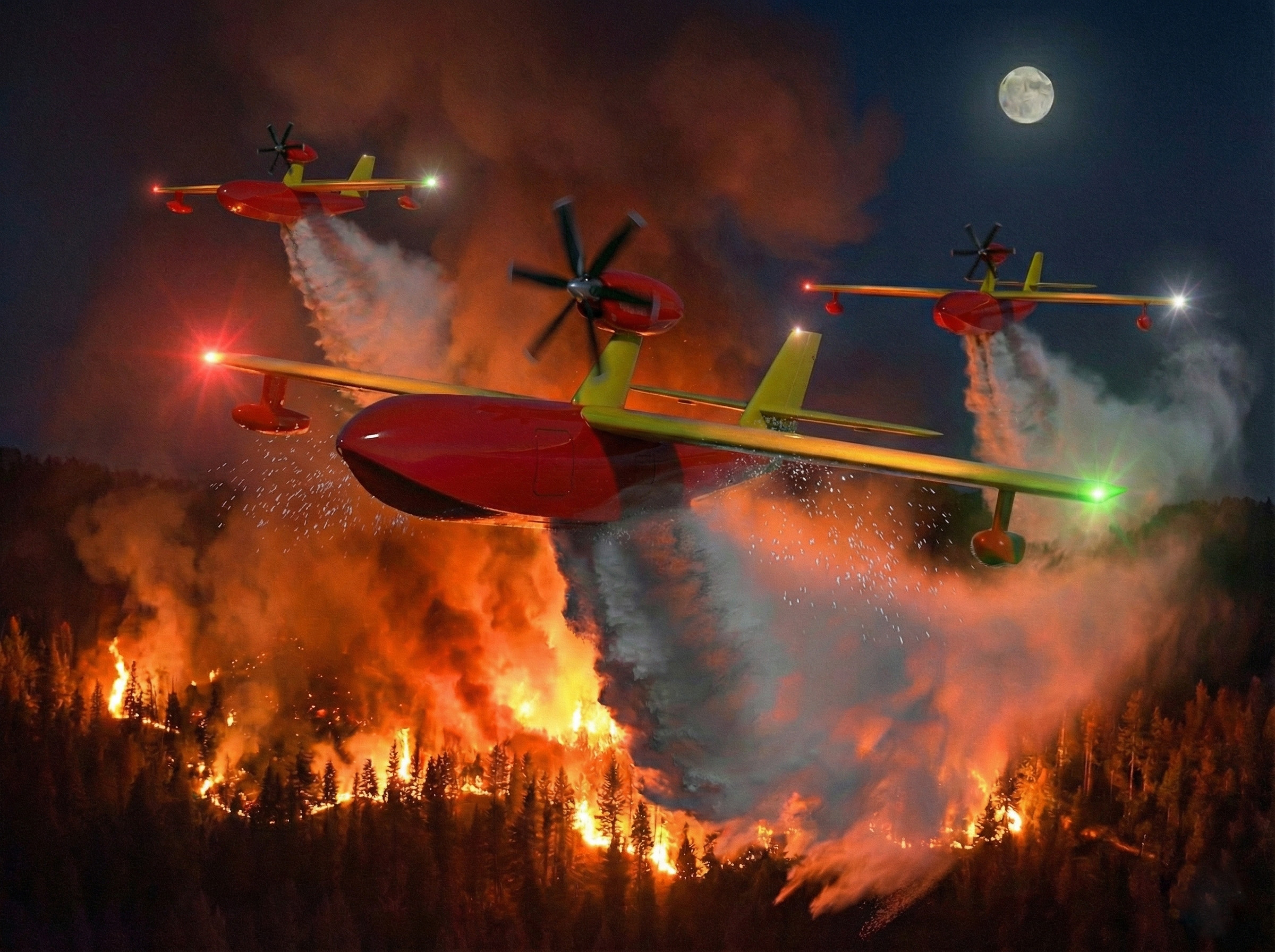
Quencher introduces the world’s first fully autonomous night-time amphibious firefighting capability.
This is not just “longer hours”—it is a fundamental shift in how wildfires are fought and contained.
Night suppression changes the outcome.
Quencher is the first aircraft designed to deliver it.