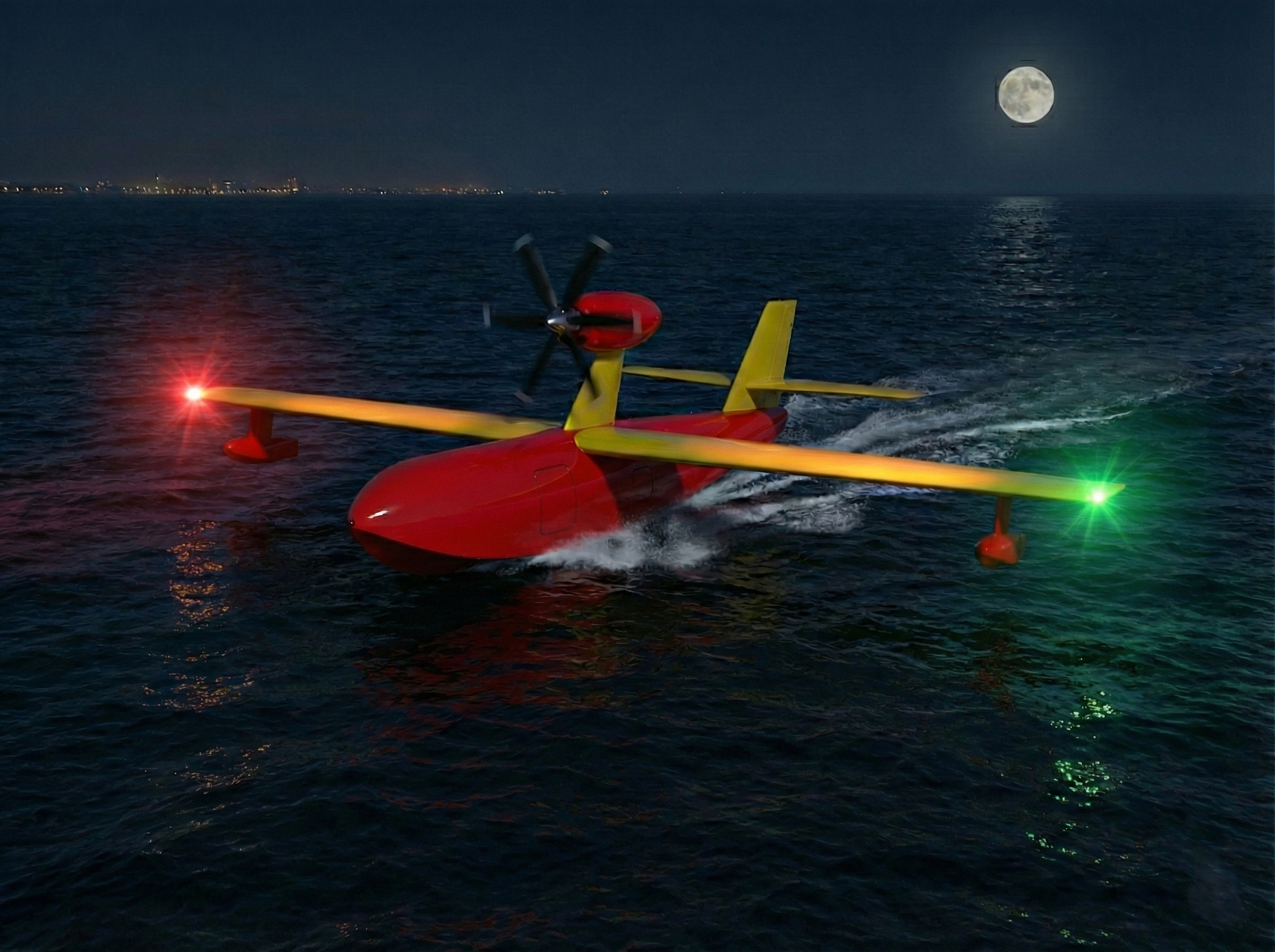
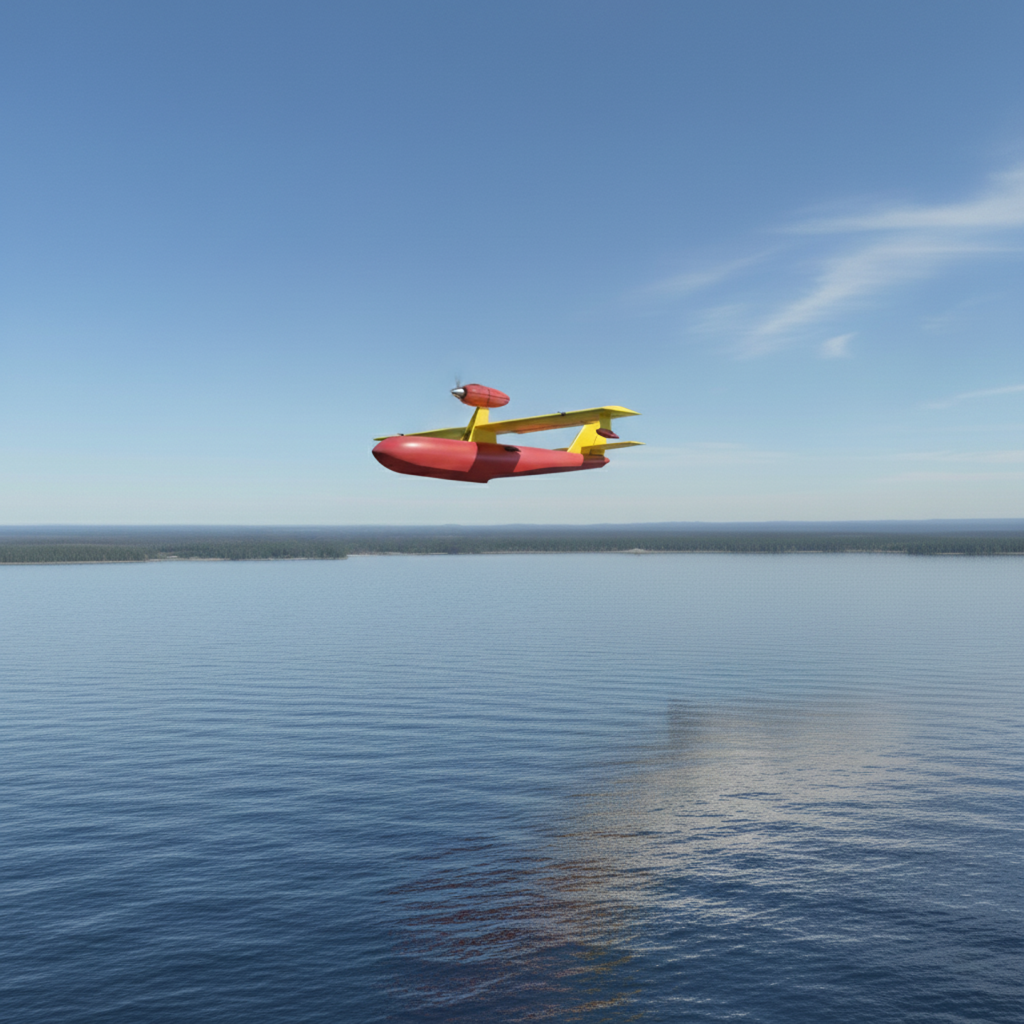
The Quencher is not simply a smaller version of conventional firefighting aircraft — it is a new category of aerial firefighter, designed from the ground up to meet today’s wildfire challenges
Unmanned & Safe. The Quencher removes pilots from dangerous wildfire environments entirely. By operating autonomously, it eliminates crew fatigue, smoke exposure, and flight risk. Every mission can be flown into the heart of a fire zone without putting lives on the line.
Day and Night. Unlike conventional fixed-wing aircraft restricted to daylight, The Quencher is equipped for continuous day-and-night missions. Advanced sensors and AI flight control systems enable precision scooping and dropping in low-visibility conditions. This allows fires to be fought through the night, when winds are often calmer and conditions can be more favorable for suppression
AI-Enhanced Autonomy. Artificial intelligence is at the core of The Quencher’s design. AI manages flight stability, scooping maneuvers, and drop optimization, while also analyzing fire spread in real time. This ensures every liter of water is placed exactly where it will have the greatest impact.
Swarm Operations. The Quencher is built for networked teamwork. One operator on the ground can supervise up to five aircraft simultaneously, coordinating them as a fleet. This swarm capability multiplies effectiveness while keeping staffing costs minimal, making national-scale deployments realistic and affordable.
Amphibious Efficiency. With its hull design, The Quencher can scoop 4,500 liters in under 15 seconds from lakes, rivers, or the sea. Amphibious capability ensures the aircraft can operate in regions with limited infrastructure, relying only on natural water sources for rapid refilling.
Rapid Turnaround. Every aspect of The Quencher is optimized for speed:
-
Scoop in seconds.
-
Short taxi-to-takeoff distance.
-
Efficient climb and drop cycle.
This allows continuous suppression, with multiple Quenchers maintaining pressure on a fireline until it is contained.
-